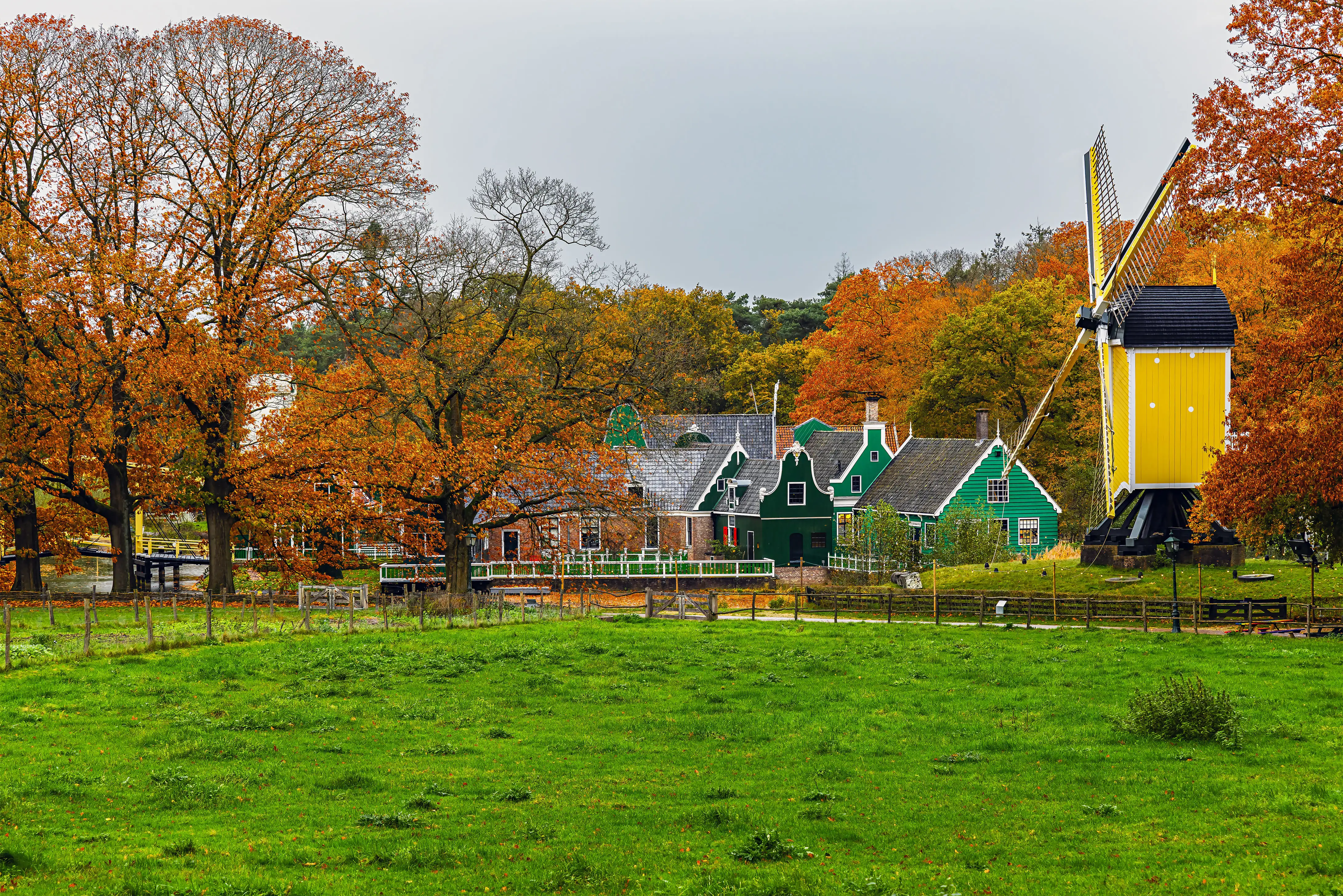
The best overall time to visit the Netherlands for comfortable weather and manageable crowds is late April through May or September through early October, but the ideal month depends entirely on your priorities. Tulip fields demand a narrow spring window; city museums reward spring and autumn visits; cycling and the coast shine in summer. Below, you’ll find a month-by-month breakdown, price benchmarks, and realistic advice for planning around rain, festivals, and flower blooms.
- JanuaryCheapest month (30–40% off hotels)
- JulyPeak hotel prices
- AprilDriest month (41 mm)
- Mid-Apr – early MayBest tulip window
Netherlands Climate at a Glance
The Netherlands has a temperate maritime climate with cool summers, mild winters and rainfall distributed throughout the year. There is no true dry season; even the driest month, April, averages 41 mm of rain over about 11 days. Daylight swings from 7.5 hours in December to 17 hours in June, so sunset time significantly affects sightseeing. High season for tourism runs from mid-April to mid-October, with three distinct peaks: King’s Day (27 April), school summer holidays (July–August) and the autumn half-term in October. The low season is November to March, excluding the Christmas and New Year period when Amsterdam’s light festival and markets push hotel rates up again. Always pack a waterproof jacket and an extra layer, as weather can change several times in a single afternoon.
Month-by-Month Summary
| Month | Avg High / Low (°C) | Rainfall (mm) | Season | Verdict |
|---|---|---|---|---|
| January | 6 / 1 | 68 | Winter | Cold, quiet, lowest prices; canals occasionally freeze. |
| February | 6 / 1 | 56 | Winter | Still low-season, but southern carnival adds colour. |
| March | 10 / 3 | 63 | Spring | Gardens awaken; Keukenhof opens around March 20th but fields are still green. |
| April | 13 / 5 | 41 | Spring | Peak tulip season from mid-month, King’s Day crowds on 27 April. |
| May | 18 / 8 | 57 | Spring | Mild, long days, busy cities; late tulips still possible first week. |
| June | 20 / 11 | 66 | Summer | Summer start, open-air festivals, longer museum hours. |
| July | 22 / 13 | 78 | Summer | Warmest, peak tourist season; beaches and city centres very crowded. |
| August | 22 / 13 | 83 | Summer | Warm and busy; intermittent rain; Dutch families on holiday fill coastal towns. |
| September | 19 / 11 | 79 | Autumn | Mild cultural season; fewer crowds, museum tickets easier to secure. |
| October | 14 / 7 | 84 | Autumn | Autumn foliage, wetter; many outdoor terraces start closing. |
| November | 9 / 4 | 80 | Autumn | Grey, rainy, shortest days; budget rates before December events. |
| December | 6 / 2 | 76 | Winter | Festive lights, Christmas markets; hotel prices rise around holidays. |
Best Months for Specific Goals
Tulips and Flower Fields
Plan your visit between mid-April and early May to see the flower fields in full bloom. The Keukenhof gardens in Lisse open roughly from the third week of March to mid-May (in 2025, 20 March–11 May), but the outdoor bulb fields that stretch from Leiden to Haarlem reach peak colour for only 3–4 weeks, typically the second half of April. An adult Keukenhof ticket costs €19.50 online; bus 852 from Amsterdam RAI station delivers you in about 40 minutes. The 35‑km Bollenstreek cycling route between Haarlem and Leiden is at its most dramatic during this window. If you arrive in late May, the fields will already be headed—farmers cut blooms to preserve the bulbs. The Bloemencorso flower parade, a 42‑km procession from Noordwijk to Haarlem, usually takes place on a Saturday in the second half of April; roadside viewing is free but crowds are substantial.
City Breaks and Museums
For uncrowded galleries and comfortable sightseeing, target late spring (May) or early autumn (September). In Amsterdam, advance timed tickets are essential for the Anne Frank House (€16, released six weeks ahead), the Van Gogh Museum (€21) and the Rijksmuseum (€22.50). July–August queues for same‑day entry can exceed two hours, and tickets for the Anne Frank House often sell out for the entire month. The Mauritshuis in The Hague (€19, home of Vermeer’s Girl with a Pearl Earring) and Depot Boijmans Van Beuningen in Rotterdam (€20) are far quieter on weekday mornings in May and September. In Utrecht, a combination ticket for the Centraal Museum and the Rietveld Schröder House costs €18.50. Throughout these shoulder months you can eat on a canal‑side terrace without shivering or sweating, and inter‑city trips—such as Amsterdam to Rotterdam by Intercity direct (40 minutes, €17.20)—run without holiday engineering works that often disrupt summer Sundays.
Cycling and Beach Days
The Dutch coast and cycling routes are at their best from June to early September, when daytime highs reach 20–22°C and you can rely on about 16 hours of daylight. Rent a city bike from MacBike (stations at Amsterdam Centraal, Vondelpark and Waterlooplein) for €14.75 per 24 hours, then ride the 32‑km Waterland loop north of the city through Broek in Waterland and Monnickendam. Train‑bike combos open up national parks: a day return to Arnhem (€20.20 off‑peak, 1 hour) puts you at the edge of the Veluwezoom, where white bikes are free to use. For beach time, Scheveningen (tram 1 from The Hague Hollands Spoor) and Zandvoort aan Zee (direct train from Amsterdam Centraal, 30 minutes, €6.80) have broad sands lined with pavilions. North Sea water temperature reaches only 16–18°C in August, so swimming is a brisk dip at best. Dutch school holidays run through July and August; Zandvoort’s beach clubs can feel packed by 11:00 on a sunny Saturday. A beach cabin rental in Scheveningen in August costs about €35–50 per day, while a simple fish lunch at a pavilion runs €12–16.
Cheapest Time to Visit
January and February deliver the lowest prices of the year, with hotel rates typically 30–40% below July peaks. A double room in a 3‑star hotel in Amsterdam’s Museumkwartier that reaches €200–220 in July drops to €80–110 in January. In Rotterdam and Utrecht, similar discounts apply; a chain hotel like Motel One Rotterdam can dip to €75 per night. Museum queues vanish, and most indoor attractions operate normal hours. Inter‑European flight deals are common, and transatlantic return fares from the US East Coast sometimes fall below €350 to Schiphol. November—before Sinterklaas arrivals and Christmas markets—offers comparable savings, though you trade fewer daylight hours. Avoid King’s Day weekend (26–28 April) if you want a bargain; a basic hostel bed in Amsterdam then can surpass €100.
Worst Time to Visit (and Why)
November is the least rewarding month for a visit, combining the highest number of wet days (on average 17), barely eight hours of daylight, and closed seasonal attractions. Keukenhof is shut, many countryside walking paths are muddy, and canal‑boat companies run reduced schedules. Coastal pavilions often board up until spring. That said, indoor museums remain open, and the arrival of Sinterklaas in mid‑November brings some festive charm. Late December sees Christmas markets in Maastricht, Haarlem and Dordrecht, but hotel prices in Amsterdam jump 20–30% over the holiday weeks, and heavy fog or winter storms can cause flight cancellations at Schiphol.
What Most Visitors Get Wrong
A widespread mistake is assuming tulip fields bloom throughout spring. The outdoor bulb fields that appear in promotional photos peak for just 3–4 weeks, usually from the second week of April to the first week of May. Keukenhof’s early‑March opening shows mainly indoor displays; the spectacles of striped colour outside happen later. Travellers who book an April trip for the last week of the month catch the show; those arriving in late May will find fields already topped and green.
Frequently Asked Questions
When is the best time to see tulips in the Netherlands?
Mid‑April to early May for the outdoor fields. Keukenhof is open from mid‑March to mid‑May, but the fields around Lisse, Hillegom and Noordwijk reach peak colour in the second half of April. Always check the weekly bloom updates on the Keukenhof website before booking.
Is the Netherlands crowded in summer?
Yes. July and August bring the highest visitor numbers, especially in Amsterdam’s canal belt, the Rijksmuseum and Zandvoort beach. Book accommodation and key museums at least four to six weeks ahead, and expect standing‑room only on inter‑city trains to the coast on sunny weekends.
How many days of rain does Amsterdam have?
Amsterdam records about 133 days per year with at least 1 mm of rain. Rain falls in all months; November is typically the wettest (80 mm), April the driest (41 mm). A pop‑up shower can occur even on a sunny summer afternoon.
What is the cheapest month to visit the Netherlands?
January offers the lowest combined accommodation and flight prices. You can find 3‑star Amsterdam hotels for €80–110, roughly 30–40% less than in July, plus minimal museum queues and off‑peak train fares.
Do I need to book museums in advance?
For the Anne Frank House, Van Gogh Museum and Rijksmuseum, advance timed‑entry tickets are essential year‑round. During spring and summer, same‑day tickets often sell out completely. In The Hague and Rotterdam, same‑day entry is more likely on weekdays outside July and August, but booking ahead still guarantees your slot.
[prebo_framework_nav]