

Planning a trip to the Netherlands means you'll encounter more than just Dutch. This small country packs surprising linguistic diversity into its borders. Whether you're visiting Amsterdam's canals, exploring Rotterdam's modern architecture, or wandering through The Hague's political corridors, knowing what languages people actually speak helps you connect more authentically.
Let's break down the languages spoken in the Netherlands by their actual percentages, based on the most reliable data available.
Dutch: The Official Language (96% of Residents)
Dutch is the official language of the Netherlands, spoken by approximately 96% of the population as their first language. If you're visiting, you'll hear it everywhere — from train announcements to market stalls in Alkmaar to museum descriptions in Amsterdam.
What makes Dutch particularly interesting for travelers is its relationship to English and German. You'll notice familiar words if you speak either language. "Huis" means house, "water" is water, and "bedankt" means thanks. The Dutch are proud of their language, even if they switch to English quickly when they hear your accent.
For a deeper dive into Dutch language and culture, the self-guided audio tour in Alkmaar offers over 30 stories that reveal local legends and history in your own language.
English: Nearly Universal (90-93% Fluency)
The Netherlands consistently ranks as the best non-native English speaking country in the world. Between 90% and 93% of Dutch people speak English fluently. This isn't basic tourist-level conversation either — most Dutch people speak English at a near-native level.
You can absolutely visit the Netherlands speaking only English. Every museum, restaurant, and train station operates in English. The Rijksmuseum offers all exhibits in English. The Anne Frank House provides English audio guides. You'll never feel lost.
But here's the thing: locals appreciate when you try a few Dutch words. A simple "dank je wel" (thank you) or "hallo" goes a long way. It shows respect for their culture, even when they'd happily switch to English.
The Amsterdam Red Light District walking tour is available in English, German, Italian, Spanish, or French — perfect if English isn't your first language either.
Frisian: The Second Official Language (Approximately 450,000 Speakers)
Frisian is the only other official language in the Netherlands, spoken primarily in the northern province of Friesland. About 450,000 people speak it, representing roughly 2.6% of the Dutch population.
This is a living language with its own literature, media, and education system. In Friesland, road signs appear in both Dutch and Frisian. You'll hear it in Leeuwarden, the provincial capital, and in small villages throughout the region.
Frisian is actually closer to English than Dutch is. "Brea" means bread (think "brioche"), "tsiis" means cheese, and "wetter" means water. If you're visiting Friesland, learning a few Frisian words shows genuine cultural awareness.
The full-day Discover The Netherlands Tour from Amsterdam includes visits to multiple destinations, giving you a taste of regional diversity including areas where Frisian culture is present.
Regional Dialects and Low Saxon (About 25% Speak a Dialect)
Beyond standard Dutch, about 25% of Dutch people speak a regional dialect at home. These aren't just accents — they're distinct linguistic varieties with different grammar and vocabulary.
The main dialect groups include:
- Low Saxon: Spoken in the northeast (Groningen, Drenthe, Overijssel)
- Limburgish: Spoken in the southeast province of Limburg
- Brabantian: Common in North Brabant
- Zeelandic: Found in the southwestern province of Zeeland
If you're visiting Rotterdam or The Hague, you'll hear distinct local accents. Rotterdam's dialect is famously direct and pragmatic — matching the city's no-nonsense character. The Tour in Spanish to Rotterdam and The Hague gives you local insights into both cities' unique character.
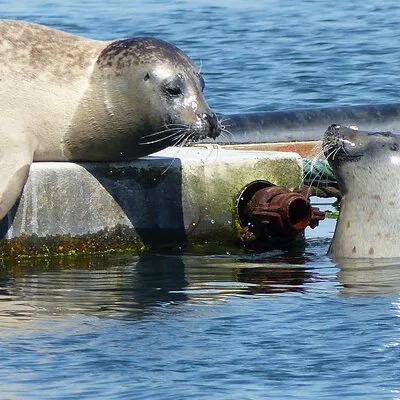
Zeeland seals Beach safari NL/DE
Join Us on a Seal Beach Safari! See the greatest predators of the Noordsea, from very close on the beach in there…
Book on ViatorImmigrant Languages: Turkish, Arabic, and More
The Netherlands is home to significant immigrant communities, bringing their languages with them. Turkish is spoken by about 400,000 people (2.3% of the population). Arabic speakers number around 300,000 (1.7%), primarily from Morocco and the Middle East.
Other notable immigrant languages include:
- Berber/Tamazight: Spoken by Moroccan-Dutch communities
- Papiamento: From the Caribbean islands of Aruba, Curaçao, and Bonaire
- Indonesian: Historical ties mean some older generations still speak it
- Polish: A growing community of about 200,000 speakers
In major cities like Amsterdam, Rotterdam, and The Hague, you'll hear these languages in neighborhoods, markets, and restaurants. It adds another layer to the Netherlands' linguistic landscape.
The self-guided audio tour of The Hague offers stories in seven languages, reflecting the city's international character as home to the Dutch government and many embassies.
German: A Strong Third Language (About 70% Have Some Proficiency)
Given the Netherlands shares a long border with Germany, it's no surprise that German is widely understood. About 70% of Dutch people have some German proficiency, though fluency levels vary. Older generations tend to speak German better than younger ones.
In border regions like Limburg and Gelderland, German is more common. You'll hear it in shops, restaurants, and markets near the border. Many Dutch people watch German television and consume German media.
For travelers, you can get by with German in a pinch, though most Germans visiting the Netherlands find it easier to speak English with locals.
French: Limited but Present (About 15-20% Speak It)
French proficiency in the Netherlands is lower than English or German. About 15-20% of Dutch people speak French, mostly those who studied it in school or live near the Belgian border.
French is more common in the southern provinces, particularly Limburg and North Brabant, which border French-speaking Wallonia in Belgium. In Amsterdam and Rotterdam, you'll find French speakers in hospitality and tourism industries.
Spanish, Italian, and Other European Languages
Spanish and Italian are growing in popularity, especially among younger Dutch people. About 5-10% speak Spanish at a basic level, and a similar percentage speak Italian. These languages are more common in tourism, hospitality, and international business.
If you're taking a tour in Spanish to Rotterdam and The Hague, you'll find Spanish-speaking guides who can provide deep cultural context in your language.
Practical Tips for Language in the Netherlands
FAQ: Languages in the Netherlands
Question Can I visit the Netherlands speaking only English?
Absolutely. Over 90% of Dutch people speak English fluently. All tourist infrastructure operates in English. You'll have no problems in cities, museums, restaurants, or public transport.
Question What percentage of Dutch people speak Frisian?
About 2.6% of the population speaks Frisian, primarily in the province of Friesland. It's the second official language of the Netherlands with its own education system and media.
Question Is Dutch hard to learn for English speakers?
Dutch is considered one of the easiest languages for English speakers to learn. The Foreign Service Institute estimates about 600 hours of study to reach professional proficiency. Many words are similar to English and German.
Question Do I need to speak Dutch to work in the Netherlands?
In international companies and tech sectors, English is often the working language. However, speaking Dutch significantly improves job prospects and daily life. Many expats learn basic Dutch within their first year.
Question What language do they speak in Amsterdam?
Amsterdam primarily speaks Dutch, but English is universal. You'll also hear Turkish, Arabic, Spanish, French, and German in different neighborhoods. The city's international character means linguistic diversity is the norm.
Question Are there language requirements for Dutch citizenship?
Yes. To become a Dutch citizen, you must pass the integration exam, which includes a Dutch language test at A2 level (basic proficiency). This requirement applies to most non-EU residents.
Some links below are affiliate links — we may earn a commission at no extra cost to you, which helps keep our guides free.