

Amsterdam's canal belt is beautiful, but it's also where most of the city's 20 million annual visitors concentrate. Step beyond that tourist bubble and you'll find a different Amsterdam—one where locals actually live, work, and argue about gentrification over strong coffee.
The city's alternative neighborhoods—De Pijp, Noord, Oost, and West—each have their own personality. They're where you'll find street art that isn't curated for Instagram, family-run eateries that haven't made the guidebooks, and parks where the city's real rhythm plays out.
Here's how to explore them like someone who lives here, not just visits.
De Pijp: The Multicultural Heart That Refuses to Be Tamed
De Pijp was built in the 19th century as a working-class district, and it still wears that history proudly. Today it's Amsterdam's most diverse neighborhood—Turkish greengrocers sit next to specialty coffee shops, and Surinamese roti shops hold their own against natural wine bars.
The neighborhood's anchor is the Albert Cuypmarkt, a street market that's been running since 1905. It's genuinely local, not a tourist reconstruction. You'll hear Dutch, Arabic, and Sranan Tongo spoken between the stalls selling fresh stroopwafels, raw herring, and fabrics.
What makes De Pijp feel alternative rather than just trendy is its refusal to be one thing. The streets around the market are a mix of social housing and newly renovated apartments. That tension gives the neighborhood its edge.
The best way to understand De Pijp's food culture is through your stomach. A self-guided food tour works well here because the neighborhood rewards wandering. You'll hit six to eight family-owned stops, from traditional Dutch specialties to the international flavors that define this area. The tour costs around €17 plus whatever you spend on food—budget another €20–27 for tastings. Some stops close on Wednesdays and Thursdays, so plan for a Friday or Saturday start between 11 AM and 2 PM.
If you prefer a guide to lead the way, the Amsterdam Food Tour: Authentic Dutch Tastings, Canals & Culture takes small groups through historic neighborhoods with a local storyteller. Reviewers consistently praise the guides' ability to connect food to Amsterdam's complicated history. At roughly €120 per person, it's an investment—but it's also a 5.0-rated experience with 375 reviews behind it.
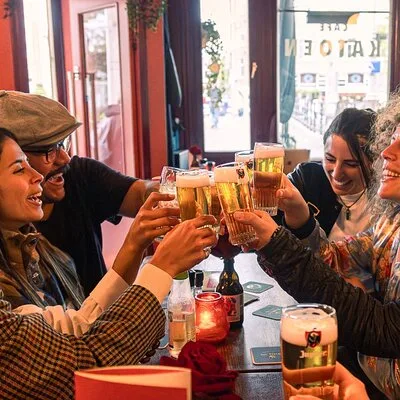
Amsterdam Food Tour: Authentic Dutch Tastings, Canals & Culture
Sherpa's Amsterdam food tour is a small-group walking tour that pairs authentic Dutch tastings with the city's culture…
Book on ViatorAmsterdam Noord: The Former Shipyard Turned Creative Playground
Cross the IJ River on the free ferry behind Centraal Station, and you've entered a different city. Amsterdam Noord was industrial land for centuries—shipyards, warehouses, and working docks. The 1980s collapse of that industry left vast empty spaces, which artists and squatters gradually claimed.
The result is NDSM Wharf, a former shipbuilding site now filled with street art, artist studios, and repurposed industrial buildings. The IJhallen flea market here is Europe's largest, drawing serious vintage hunters. The neighborhood still feels raw in ways central Amsterdam doesn't.
Noord is also where you'll find some of the city's most interesting bars and music venues. The nightlife here skews underground—think warehouse parties rather than polished clubs. That's a feature, not a bug.
Getting to Noord is part of the experience. The free ferries run constantly from behind Centraal Station, and the ride takes just a few minutes. Once you're across, rent a bike or use the GVB metro line that now serves the area. A day ticket costs €10, which also covers your return if you're coming from elsewhere in the city.
The neighborhood's creative energy draws all kinds of visitors. A cultural walking tour led by locals who actually live in Noord offers perspectives you won't get from standard sightseeing routes. The Humans of Amsterdam tour has a perfect 5.0 rating from 340 reviews, with travelers repeatedly mentioning how guides revealed parts of the city they'd never have found alone.
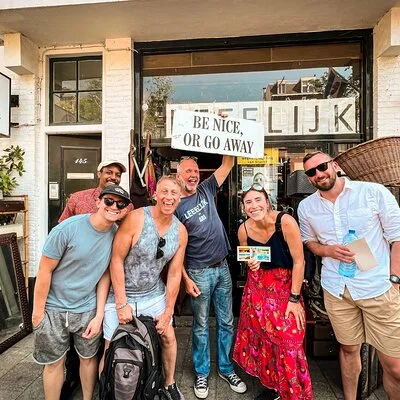
Humans of Amsterdam - Unique Cultural Walking Tour
Join us on what countless guests have called their best travel experience ever. This is not a standard walking tour.
Book on ViatorAmsterdam Oost: Where Multicultural Amsterdam Actually Lives
Oost (East) is the city's most underrated district. It skips the canal-ring grandeur entirely, offering instead a genuine cross-section of contemporary Amsterdam life. The Oosterpark anchors the neighborhood, and the streets around it mix Indonesian warungs, Moroccan bakeries, and Dutch brown cafes.
This is where Amsterdam's colonial history becomes visible in the present. The city's largest Indonesian and Surinamese communities settled here in the postwar decades, and their food culture defines the neighborhood. A rijsttafel—the Dutch-Indonesian rice table—is worth seeking out here rather than in the tourist-heavy center.
The neighborhood also has a strong arts scene. Several former industrial buildings now house galleries and creative workspaces. The street art here is less curated than in Noord but arguably more authentic—it reflects actual neighborhood life rather than festival commissions.
Oost doesn't have the name recognition of De Pijp or Noord, which works in your favor. You'll find fewer tourists and more reasonable prices at the neighborhood's cafes and restaurants.
Amsterdam West: The Gentrification Frontier
West is Amsterdam's largest district and its most complicated. Neighborhoods like De Baarsjes and Oud-West have undergone rapid gentrification over the past two decades. Social housing sits beside renovated canal houses, and the mix creates real friction—and real energy.
The Foodhallen in Oud-West occupies a former tram depot and offers the city's most concentrated food hall experience. But the real West experience is in the streets around it: the Ten Katemarkt is a smaller, more local alternative to Albert Cuyp, and the neighborhood's cafes are where Amsterdam's creative class actually works.
West also has the city's best parks for escaping crowds. Rembrandtpark and Erasmuspark both offer green space without the tourist traffic of Vondelpark. On a sunny day, you'll see more locals than visitors.
The neighborhood's transformation hasn't been without controversy. Long-time residents have been priced out as rents climbed, and the area now reflects the city's broader housing crisis. That's part of understanding what makes West feel alternative—it's a place in transition, not a finished product.
Why Skip the Center?
The city center has real problems in 2026. Amsterdam has capped visitor numbers at 20 million per year and is actively discouraging day-trippers with a €15 daily tourist tax. Hotel taxes now total roughly 33.5% of your room rate. The center is crowded, expensive, and increasingly designed for tourists rather than residents.
The alternative neighborhoods offer the opposite experience. You'll find lower prices, more authentic food, and interactions that don't start with someone trying to sell you a canal cruise. That's not to say the center isn't worth visiting—the Rijksmuseum and Van Gogh Museum are unmissable. But you don't have to base your entire trip there.
If you're planning to visit the major museums anyway, the Amsterdam Pass (45+ attractions including the Rijksmuseum) can save you money. Reviewers note it's worth doing the math first—the pass pays off if you're visiting several included attractions, but isn't always cheaper than booking individually. Prices start around €64–79 for one day.
For tickets and what the tour includes, see our Heineken Experience guide.
Practical Tips
FAQ
How far are the alternative neighborhoods from the city center?
De Pijp is a 15-minute walk from Museumplein. Noord is a 5-minute free ferry ride plus a short walk or bike ride. Oost and West are both 20–30 minutes by tram from Centraal Station.
Are these neighborhoods safe?
Yes. Amsterdam is generally safe, and these neighborhoods are no exception. Standard urban precautions apply—watch your belongings in crowded markets and stick to well-lit streets at night.
Which alternative neighborhood is best for food?
De Pijp has the widest variety, thanks to its multicultural history. Oost is best for Indonesian and Surinamese cuisine. West has the most trendy new openings. Noord is more about creative spaces than food, though there are good spots near NDSM.
Can I visit these neighborhoods on a day trip from the center?
Yes, but you'll want more time. De Pijp deserves at least half a day. Noord needs a full day to do properly. Oost and West can each be covered in a few hours. If you're short on time, prioritize De Pijp and Noord.
Whether the I amsterdam City Card pays off depends on your museum list — see our I amsterdam City Card guide.
What's the best way to combine these neighborhoods with the center?
Start your day at a museum like the Rijksmuseum, then head to De Pijp for lunch at the Albert Cuypmarkt. Spend a second day in Noord, followed by an evening in Oost or West. This spreads your time across the city without constant backtracking.
Are there any 2026 changes I should know about?
Yes. Short-stay rental rules have tightened—Airbnb stays in the center and De Pijp are now limited to 15 nights per year. The EU's new Entry/Exit System requires biometric data from non-EU travelers starting April 2026. ETIAS authorization (€20) is expected later in 2026.
The Bottom Line
Amsterdam's alternative neighborhoods aren't hidden secrets—they're the places where the city actually happens. De Pijp's market chaos, Noord's industrial creativity, Oost's multicultural energy, and West's gentrification story all offer something the canal belt can't: a sense of how Amsterdam lives when the tourists go home.
Go for the food, stay for the street art, and leave with an understanding of a city that's far more complicated—and far more interesting—than its postcard image suggests.
The center will always be there, beautiful as ever. But the Amsterdam you'll remember is the one you find when you cross the river, wander past the market stalls, and let the city show you its real face.
Some links below are affiliate links — we may earn a commission at no extra cost to you, which helps keep our guides free.