
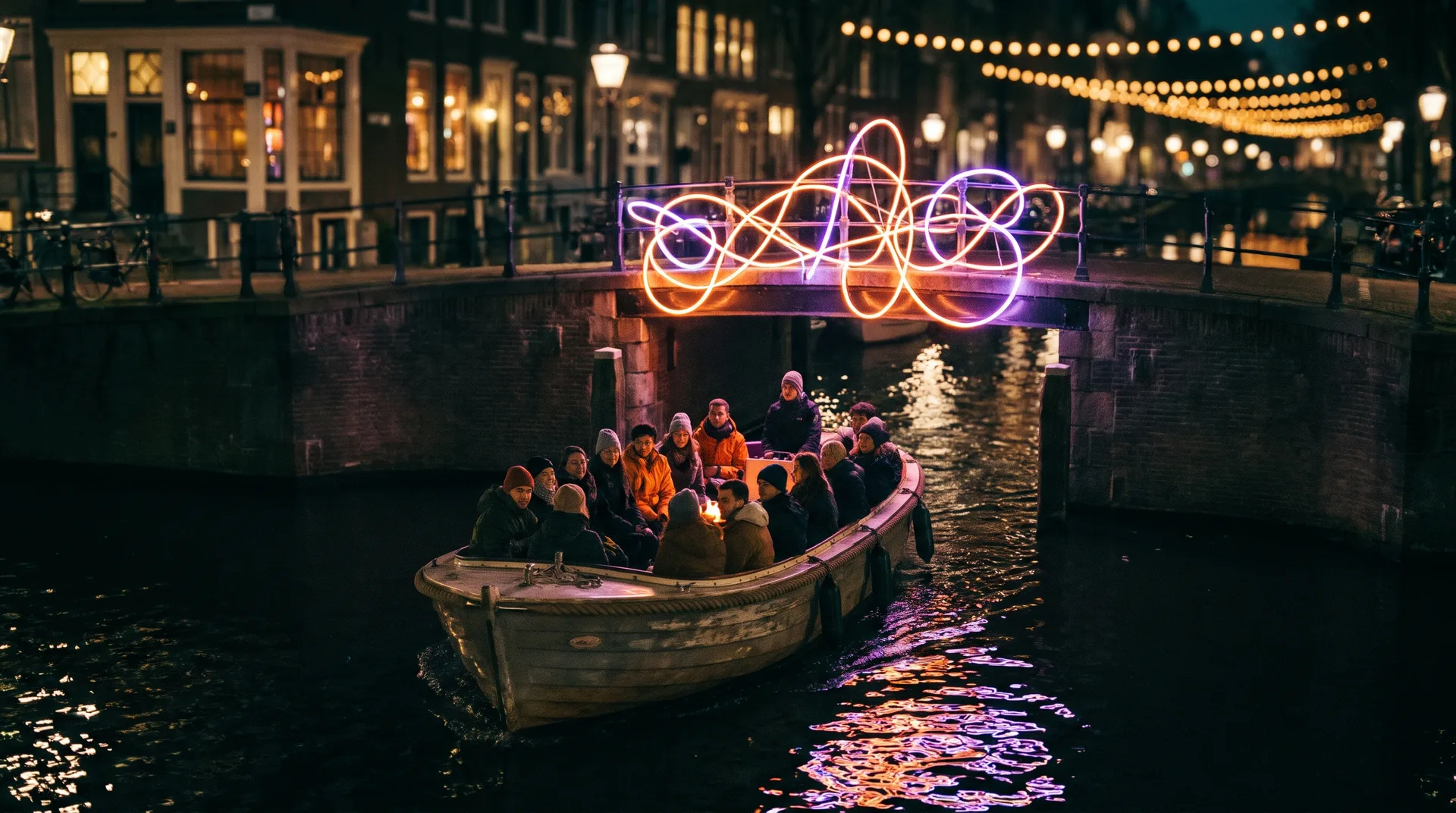
The Amsterdam Light Festival turns the canal ring into an open-air exhibition every winter, and a boat is the only way to see most of it properly. Installations sit on bridges, along quays and occasionally on the water itself, which means walking gets you fragments while a boat gets you the full route.
This guide sticks to the decision you actually face: which boat, at what time, for how much, and what to avoid. Prices and timings below reflect the 2026–27 edition and the standard canal-cruise market in Amsterdam.
Typical light-festival cruise price: €25–€40 per adult for a themed 75–90 minute departure
Standard 1-hour canal cruise (non-festival): €15.50–€25
Best departure: after 17:00, once darkness is complete
Booking lead time: 1–3 weeks for weekend slots, longer around Christmas and New Year
Why the Boat Is the Point, Not an Add-On
The festival's route changes each edition, but the structure doesn't: dozens of light artworks spaced along a loop through the Grachtengordel and out toward the Amstel. On foot you'd cover maybe a third of it in an evening, in the cold, while dodging cyclists on icy bridges.
A boat compresses the whole route into 75–90 minutes with a guide narrating each piece. That's the real value — not the cruise itself, but the commentary that tells you what you're looking at and who made it.
One thing to know before you book: light-festival cruises are a separate product from the standard sightseeing cruise, and they sell out faster. The big operators run dedicated departures from moorings near Centraal Station and along the Rokin, and prices sit above the ordinary €15.50–€25 range because of the narration and the timed slot.
Open Boat or Covered Boat: The Choice That Actually Matters
This is the decision most people get wrong, and it's entirely about weather.
Open boats give you an unobstructed view in every direction, which matters when installations sit high on bridges or low on the waterline. They're smaller, usually carrying 8–12 people, and the guide can talk to you rather than at you. The trade-off is obvious: in January, an open boat on the Amstel is genuinely cold. Blankets help; they don't fix everything.
Covered boats with heated cabins and large windows are the safer bet for families, older travelers and anyone visiting in the coldest weeks. You lose some upward sightlines through the roof, and window reflections can interfere with photos.
If you want the small-boat feel with a bit more character than the big glass-topped cruisers, the Clog Boat is a restored local vessel with Dutch items on board — reviewers consistently mention the friendly two-person crew and the fact that it feels nothing like the large operators. Recent guests describe the guide as knowledgeable about the history around the canals, and the boat's small capacity means you sometimes end up with a near-private trip.
Timing Your Departure Around the Light
Darkness is the whole point, so the useful window is narrow. Sunset in Amsterdam falls between roughly 16:30 and 17:00 in December and January, with full darkness by about 17:30.
That makes the 18:00–20:00 departures the sweet spot: fully dark, but not so late that you're fighting fatigue after a museum day. Later slots from 21:00 onward are quieter and often slightly cheaper, and they suit anyone who wants dinner first.
Two timing traps worth knowing:
- Twilight departures in late November or late January can start before the installations read clearly. Check the actual sunset time for your date, not just the festival calendar.
- Weekend evenings in the Christmas–New Year window are the single busiest period. Book those slots at least three weeks out.
What You'll Actually See (and What You Won't)
Every edition brings a new theme and a new set of artists, so don't book based on last year's photos. What stays consistent is the geography: the route typically threads the Herengracht, Keizersgracht and Prinsengracht before opening onto the Amstel, where the larger-scale pieces tend to sit.
A few honest expectations:
- Not every installation is spectacular. Some are subtle, small and easy to miss if you're chatting. Sit near the guide.
- Photography is hard. Moving boat, low light, glass reflections. A phone with a good night mode beats a fancy camera you can't stabilize.
- The commentary is half the experience. Boats with live guides consistently outperform audio-only options, and reviewers of Amsterdam's small-group tours repeatedly single out guides as the reason a trip worked.
If you'd rather pair the lights with a broader look at the city, a private car tour of the Old Town highlights covers the Jordaan, the Flower Market and the canal belt in daylight — a sensible complement rather than a substitute, since cars can't follow the water route.
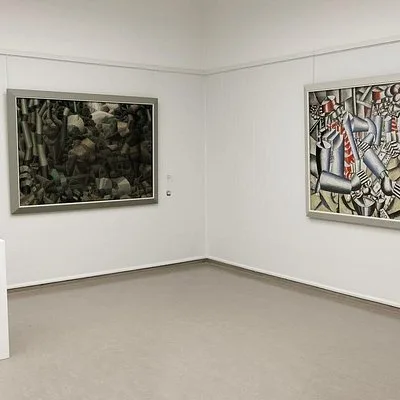
Private Half Day Trip To Kröller Müller Museum
After a short meet and greet with your driver in the lobby of your accomodation, you can relax in the Mercedes Benz vehicle. It's about 1 hour driving from Amsterdam to the Kröller-Müller Museum.
Book on ViatorGroup Size, Guides and the Small-Operator Advantage
Amsterdam caps guided groups in the city center at 15 participants, and tours may only run between 08:00 and 22:00. That regulation shapes what's available: you won't find a 40-person light-festival walking group, and late-night departures have a hard ceiling.
Small-group formats win here for a practical reason — a guide narrating 20 light artworks to 30 people means you hear every third sentence. Boats carrying under a dozen passengers let the guide adjust pace and answer questions.
If your trip overlaps with the festival and you want a second small-group experience that isn't another boat, the women's history tour is a well-reviewed counterweight: 17 reviews, a 5.0 rating, and repeated praise for guides who surface stories most city tours skip. It runs on foot through the same central streets you'll cruise at night.
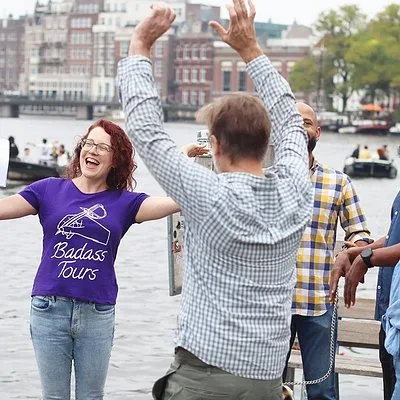
Small-Group Women's History Tour in Amsterdam
Get inspired by the hidden figures on this Amsterdam storytelling tour! Meet the women who changed Amsterdam - and the world!
Book on ViatorCombining the Cruise With an Evening in the Center
Most light-festival departures leave from moorings within a 10-minute walk of Centraal Station or Rokin, which makes an evening plan easy to build.
A workable sequence: an early dinner around Nieuwmarkt or the edge of the canal belt, a 19:00 or 20:00 cruise, then a walk back through the illuminated streets. If you're staying in the center, you can be back at your hotel by 21:30 without touching public transport.
One caution: the Red Light District sits directly between several moorings and the central hotels, and it has its own etiquette and photography rules that catch visitors out. Read the [Red Light District guide](/amsterdam-red-light-district-expectations-etiquette) before you cut through De Wallen at night — it's two minutes of reading that prevents an awkward encounter. If you want the area's history explained properly, the dedicated history-and-future tour is highly rated (10 reviews, 5.0) and, since 2020, routes around the window areas rather than past them.
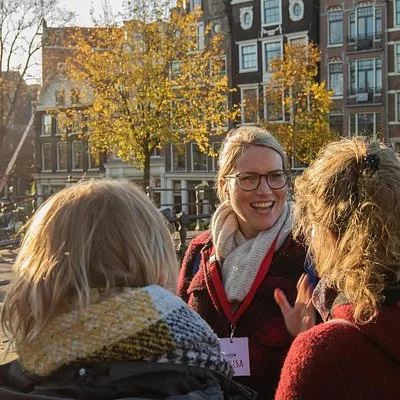
Amsterdam: Cultural Highlights + UNESCO Canals in EN/DE/ES/FR/IT
Discover the absolute highlights of Amsterdam on an entertaining 2-hour walking tour through the center of the city.
Book on ViatorBooking, Cancellations and the Weather Question
Light-festival cruises run in conditions that would cancel a summer sightseeing trip. Operators rarely cancel for cold or rain — they cancel for ice and high wind. If your departure is called off, you'll usually be rebooked or refunded, but check the policy before paying.
A few booking realities for 2026–27:
- Book direct or via a platform with free cancellation. Winter weather makes flexibility worth more than a small discount.
- Confirm the mooring address, not just the operator name. Several companies run multiple departure points along the same stretch of canal.
- Arrive 15 minutes early. Boats leave on schedule and the next departure may be full.
- Check whether drinks are included. Some light-festival cruises bundle glühwein or hot chocolate; others charge onboard, and card-only is common.
If you're extending your trip beyond Amsterdam, a private door-to-door transfer to Utrecht removes the train-and-luggage shuffle — useful if you're traveling with family or arriving late.
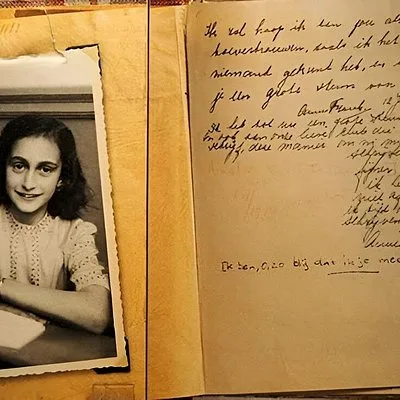
Amsterdam Anne Frank and Jewish History E Bike Tour
The Anne Frank and Jewish History Tour: see the highlights of the Jewish neighborhood of Amsterdam on an E-bike. Learn about the story of Anne Frank.
Book on ViatorPractical Tips
FAQ
When exactly does the Amsterdam Light Festival run in 2026–27?
The festival traditionally opens in late November and closes in late January, covering the Christmas and New Year period. Exact dates for the 2026–27 edition are published by the festival organisers in autumn, and boat operators release their schedules at the same time. Book once dates are confirmed rather than guessing.
How much should I expect to pay for a light festival boat tour?
Budget €25–€40 per adult for a themed 75–90 minute cruise with narration. That's above the €15.50–€25 you'd pay for a standard daytime canal cruise, reflecting the timed slot and live guide. Drinks are sometimes included and sometimes extra — check before booking.
Do light festival cruises sell out?
Yes, particularly weekend departures between mid-December and early January. Book one to three weeks ahead for those dates. Midweek slots in late November and late January are usually available with a few days' notice.
Can I see the installations without a boat?
Partly. Some artworks sit along walkable quays and bridges, and the festival publishes a walking route. But a significant share of the route follows water you can't walk alongside, and the boat is the only way to see the full collection in one evening.
Are these cruises suitable for children?
Generally yes, and covered heated boats work best for younger kids in cold weather. Departures after 21:00 tend to be quieter and less family-oriented. Check minimum age policies when booking, as some small open boats don't take very young children.
What happens if it rains or freezes?
Rain rarely cancels a departure — covered boats run regardless, and open boats usually provide blankets and umbrellas. Ice and high winds on the Amstel are the real cancellation risks. Choose an operator with a clear refund or rebooking policy so a cancelled night doesn't cost you the ticket.
Some links below are affiliate links — we may earn a commission at no extra cost to you, which helps keep our guides free.