
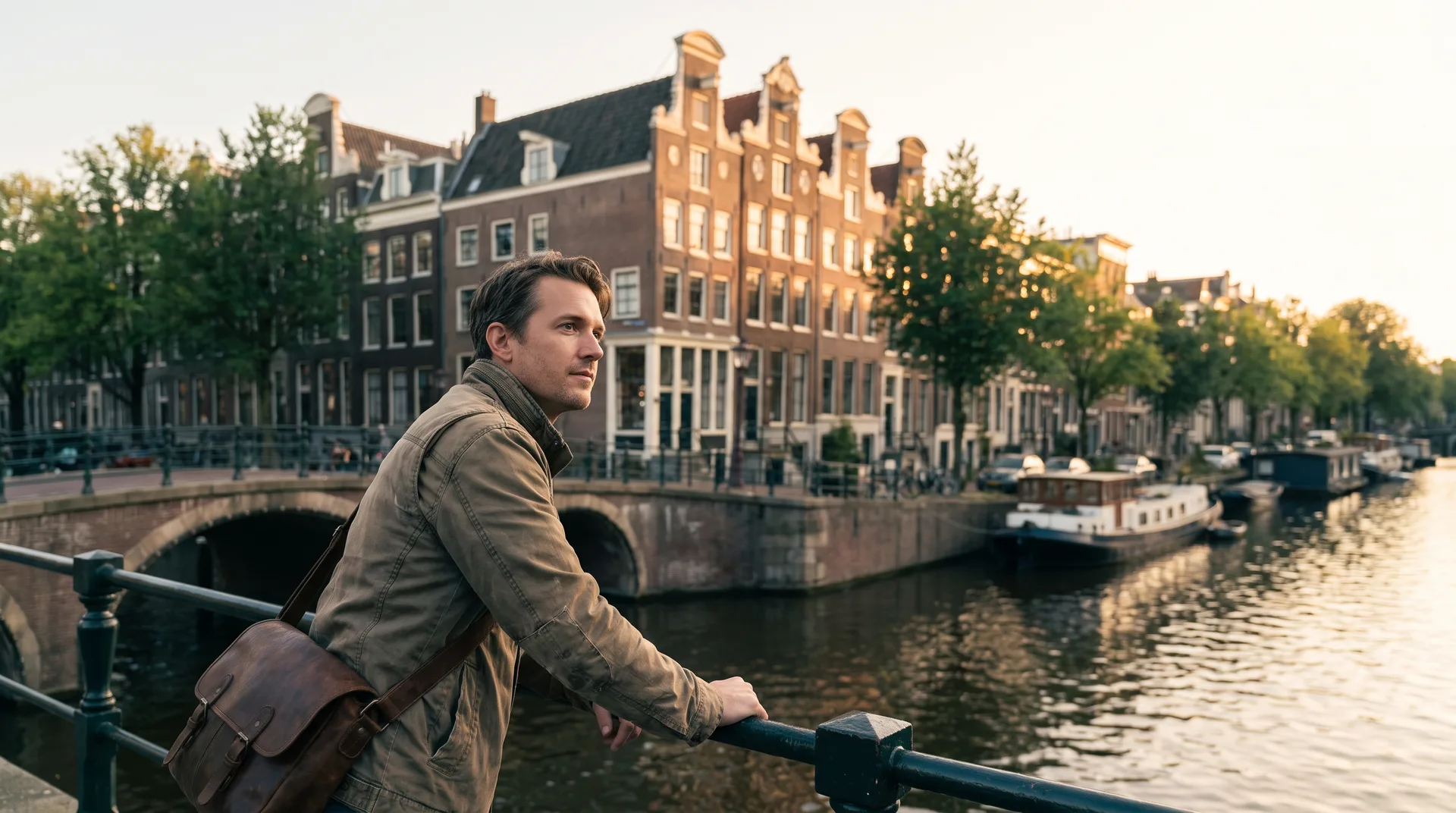
Amsterdam wears its history in layers. A 17th-century canal house might hide a church in its attic, a former brewery might sit beside a WWII memorial, and a working-class district east of the center might hold the city's oldest surviving building. For history lovers, the question isn't whether Amsterdam has depth — it's which neighborhood to base yourself in, and which pockets reward a slow, deliberate walk versus a timed museum slot.
This guide maps the city's most historically rich neighborhoods, each with a distinct era and character, so you can match your itinerary to the period you care about most.
The Canal Ring (Grachtengordel): Amsterdam's Golden Age Showcase
If you want to understand the city that traded its way into global prominence in the 1600s, start here. The Canal Ring — Herengracht, Keizersgracht, and Prinsengracht — was dug during the Dutch Golden Age and is now a UNESCO World Heritage site. The merchant houses lining these waterways weren't just homes; they were statements of wealth, with gabled facades, hidden courtyards, and warehouses tucked behind respectable fronts.
The best way to absorb this district is on foot, ideally early morning before tour groups fill the bridges. Walk the Herengracht from Leidseplein toward the Amstel and pay attention to the hoisting beams still protruding from rooftops — a reminder that these were working buildings, not just pretty facades.
For a deeper dive into how Golden Age Amsterdammers actually lived, the Rijksmuseum anchors the southern edge of this district. A standard adult ticket costs €25 online, and timed-entry booking is essential. Guided tours with reserved entry typically run €50–€85 per person, and reviewers consistently praise guides who connect the art to Dutch history. One recent visitor noted that a two-hour tour "went by very quickly" and called it a highlight of their trip.
Our Lord in the Attic: A Hidden Catholic Church
Tucked into the Canal Ring near the Red Light District edge, this museum preserves a 17th-century canal house with a fully intact Catholic church concealed in its upper floors. When Catholic worship was officially banned, wealthy families built clandestine churches like this one. Adult tickets are €18. The museum opens Monday–Saturday 10:00–18:00 and Sundays 13:00–18:00, though on the first Sunday of each month from September to June it opens at 11:00 because Mass is still celebrated in the attic church. It's closed December 25 and King's Day (April 27).
With a 4.9 rating across nearly 300 reviews, it's one of the city's most quietly impressive historic sites — small enough to see in 90 minutes, unusual enough to remember.
The Jewish Quarter (Jodenbuurt): War, Memory, and Resilience
Southeast of the center, around Waterlooplein and the Jodenbreestraat, sits the neighborhood that carries Amsterdam's heaviest 20th-century history. This was the heart of Jewish Amsterdam for centuries — and the district from which tens of thousands were deported during the Nazi occupation.
The National Holocaust Museum and Memorial opened here as a dedicated site for confronting that history. Entry tickets are available, and reviewers describe the experience as sobering and essential. The nearby Portuguese Synagogue and the Jewish Historical Museum round out a full day of reflection.
Walking the WWII Trail
Guided walking tours are the most effective way to connect the dots between sites, since much of the history is invisible without context. Anne Frank's Amsterdam Jewish History WWII tour (rated 5.0) begins at the Anne Frank House exterior and traces the persecution of Amsterdam's Jewish community through the streets themselves. Note that these tours do not include entry to the Anne Frank House — that requires a separate ticket from the museum's own website.

Amsterdam: Anne Frank and World War II Walking Tour
Join this 2-hour walking tour and learn about the Jewish history of Amsterdam.
Book on ViatorA second option, The Anne Frank Tour | Amsterdam during WWII, is a two-hour walk priced around €28 per person for public departures, with private versions starting higher. Both work well as alternatives when Anne Frank House tickets are sold out — which happens often.
Anne Frank and World War II Walking Tour in Amsterdam
Discover Amsterdam's WWII history on this 2-hour walking tour through the historic center and former Jewish Quarter.
Book on ViatorRembrandt House Museum
On Jodenbreestraat, the Rembrandt House Museum occupies the home where the painter lived and worked for nearly two decades. Adult tickets cost €23.50, with an off-peak rate of €19.50 for visits between 16:00 and 18:00 — a smart way to save if you're flexible. It's open daily 10:00–18:00, closing at 17:00 on December 24 and 31, and closed on King's Day and Christmas.
Reviewers frequently mention that seeing the reconstructed studio and etching press makes Rembrandt feel like a working craftsman rather than a distant genius.

Rembrandt House Museum Amsterdam Entrance Ticket
Museum Rembrandthuis is the only place in the world where you can experience how Rembrandt once lived.
Book on ViatorDe Wallen: The City's Oldest Address
Amsterdam's Red Light District is also its oldest quarter — the medieval core where the city began. Beyond the obvious, this area holds the Oude Kerk (the city's oldest building, dating to the 13th century), the Waag on Nieuwmarkt (a former city gate and weighing house), and narrow alleys that predate the Canal Ring entirely.
A guided walking tour is genuinely useful here, because the district's history is buried under its contemporary reputation. The Red Light District walking tour, offered in five languages and rated 4.8 across nearly 500 reviews, covers the area's medieval origins, its role in maritime trade, and how the neighborhood evolved. Travelers often note that the tour changed how they saw the area.

Anne Frank's Amsterdam Jewish History WWII Exclusive Guided Tour
On this exclusive guided walking tour, Discover the Jewish Quarter and Amsterdam during World War II.
Book on ViatorAmsterdam-Noord: Industrial History Across the Water
Cross the IJ by free ferry from behind Centraal Station and you land in a district with a completely different historical rhythm — shipyards, warehouses, and the former NDSM wharf, once one of the world's largest shipbuilding sites.
The STRAAT Museum now occupies a vast industrial hall here, dedicated to street art and graffiti as a global movement. Admission tickets are available, and the museum earns a 4.8 rating. Reviewers repeatedly mention two things: the free 24/7 ferry, and how uncrowded it feels compared to the center. One solo visitor spent over two hours there and called it underrated.
For history buffs, Noord is a lesson in how cities repurpose industrial heritage — and it pairs naturally with a morning in the Canal Ring.

Guided Bike Tour of Amsterdam's Highlights & Hidden Gems
Small Group Bike Tour! We are proud to have Amsterdam's smallest groups!
Book on ViatorPractical Tips
Museum cards: The I amsterdam City Card covers many museums and public transport, but reviewers warn you must plan carefully to get value — some attractions are free, others only discounted.
Book ahead: Timed-entry slots are mandatory at the Rijksmuseum and Van Gogh Museum. Book at least three days out, and always via the museum's own website to avoid entry-slot errors.
King's Day (April 27): Many museums close entirely. Plan around it.
Best season for walking: April–June and September–October offer mild weather and thinner crowds than midsummer.
FAQ
Which neighborhood is best for Golden Age history?
The Canal Ring. The Herengracht, Keizersgracht, and Prinsengracht were built during the 17th century, and the merchant houses, hoisting beams, and hidden churches all date to that era.
Do I need a tour to understand the Jewish Quarter?
Not strictly, but strongly recommended. Much of the WWII history is invisible without context, and guided walks connect the Anne Frank House, the Holocaust Memorial, and the surrounding streets into a coherent narrative.
Can I visit the Anne Frank House with a walking tour?
No. Walking tours cover the exterior and the surrounding neighborhood only. Anne Frank House tickets are sold exclusively through the museum's own website and sell out weeks in advance.
How much do the main historic museums cost?
Rijksmuseum entry is €25 online; Rembrandt House is €23.50 (€19.50 off-peak after 16:00); Our Lord in the Attic is €18. Guided tours with reserved entry run €50–€85.
Is De Wallen worth visiting for history, not nightlife?
Yes — it's Amsterdam's medieval core. The Oude Kerk, Nieuwmarkt, and the Waag are genuine historic sites, and a daytime walking tour reframes the district entirely.
What's the easiest way to reach Amsterdam-Noord?
Take the free ferry from behind Centraal Station. It runs 24/7 and takes about five minutes to reach the NDSM area.
Some links below are affiliate links — we may earn a commission at no extra cost to you, which helps keep our guides free.