

Amsterdam's canal belt draws millions of visitors each year, yet most never notice the wooden doors set into historic facades that hide entire miniature worlds. Behind them lie the city's famous hofjes — hidden courtyards and secret gardens that have sheltered Amsterdammers since the Middle Ages.
These tranquil spaces offer something increasingly rare in a city of 1.5 million annual visitors: genuine quiet. You'll find them in the Jordaan, the Negen Straatjes, and the Plantage district, often marked only by a small plaque or an unassuming doorway.
This guide focuses exclusively on Amsterdam's hidden courtyards and secret gardens — where to find them, how to visit respectfully, and which tours can help you uncover the stories behind these green sanctuaries.
What Are Amsterdam's Hofjes?
A hofje (plural: hofjes) is a courtyard surrounded by almshouses, originally built by wealthy merchants or charitable foundations to house elderly women or single people in need. Amsterdam once had dozens of these; roughly 30 remain in the city center today.
The Begijnhof is the most famous — a hidden courtyard dating to the 14th century, tucked behind a discreet door on Spuiplein. Unlike most hofjes, it was home to the Beguines, a lay religious sisterhood of single women who lived communally without taking formal vows.
Recent visitors consistently note the extraordinary contrast between the busy square outside and the profound calm within. Reviewers often mention the wooden house at number 34 — one of only two surviving wooden buildings in Amsterdam, dating from around 1528.
The Begijnhof chapel holds regular English-language services, and the courtyard remains an active place of worship and residence. Be mindful: this is a living community, not a museum.
The Anne Frank Connection
The Begijnhof sits just steps from the Jewish Quarter, where Anne Frank's story unfolded. A guided walking tour through this neighborhood — tracing Anne's life from her school days to the secret annex — provides valuable context for understanding Amsterdam's hidden spaces.
Many of the city's courtyards and gardens served as places of refuge during the Nazi occupation. The Plantage district, with its botanical garden and zoo, became a gathering point for resistance activities. Walking tours through the Jewish Quarter help visitors connect these green spaces to the city's wartime history.
The Anne Frank's Secrets walking tour takes you through the neighborhood that shaped Anne's early years, including the Merwedeplein square where she lived openly before going into hiding. It's a moving complement to any courtyard exploration.
The Jordaan's Courtyard Treasures
The Jordaan district — originally a working-class neighborhood built for immigrants and laborers — contains more hofjes per square meter than anywhere else in Amsterdam. Its narrow streets and hidden passages reward slow exploration.
Karthuizerhof
Tucked behind a green door on Karthuizersstraat, this courtyard dates from 1650 and was built to house elderly women. The garden is meticulously maintained, with raised flower beds, fruit trees, and a central fountain. Residents still live here, so visitors should walk softly and avoid entering private areas.
Hofje van Brienen
On the Prinsengracht, this 1804 courtyard was funded by the wealthy Brienen family. Its neoclassical gatehouse opens onto a formal garden with symmetrical paths and a central statue. The hofje remains private, but the gate is often open during daylight hours — step inside for a quick look, then step back out.
Suykerhofje
This tiny courtyard on the Lindengracht dates from 1660 and was founded by a sugar refiner — hence the name. It's one of the smallest hofjes in the city, with just a handful of houses surrounding a compact garden. You'll likely have it to yourself.
Secret Gardens in the Negen Straatjes
The Nine Streets district — a maze of narrow lanes between the Singel and the Prinsengracht — hides several gardens that few tourists discover.
The Garden Behind the Bible Museum
The Bijbels Museum (Bible Museum) on the Herengracht once housed a magnificent garden that stretched from the canal house to the back of the property. While the museum closed in 2020, the garden remains accessible during certain open-monument events. Check the Open Monumentendag weekend in September for rare access.
Keizersgracht's Hidden Courtyards
Several canal houses on the Keizersgracht contain internal courtyards that are visible only through their front gates. The garden of the Huis met de Hoofden (House with the Heads) at number 123 is occasionally open for tours. Its formal parterre garden is a rare surviving example of 17th-century Dutch garden design.
The Plantage District: Gardens of Knowledge
The Plantage district, developed in the 19th century as a leafy residential neighborhood, contains some of Amsterdam's most significant green spaces.
Hortus Botanicus
Founded in 1638 as a herb garden for plague doctors, the Hortus Botanicus is one of the world's oldest botanical gardens. Its three-climate greenhouse — built in 1697 — houses plants from tropical, subtropical, and desert regions. The garden's 4,000 plant species include a 300-year-old cycad palm, one of the oldest potted plants on Earth.
The butterfly greenhouse and the café in the former Orangery make this an ideal midday stop. Recent visitors praise the garden's peaceful atmosphere, even during peak tourist season.
Wertheim Park
This small park, wedged between the Plantage Muidergracht and the Entrepotdok, offers a quiet alternative to the crowded Vondelpark. Named after a Jewish philanthropist, the park features a memorial to the victims of the Holocaust. It's a contemplative space, best visited on a weekday morning.
How to See the Courtyards: Guided vs. Self-Guided
You have three main options for exploring Amsterdam's hidden courtyards and secret gardens: join a guided tour, rent a bike, or explore on foot with a map.
Guided Tours: The Insider Advantage
Many courtyards are technically private, and knowing which doors are open to visitors requires local knowledge. Guided tours navigate this complexity with ease.
The Guided Bike Tour of Amsterdam's Highlights & Hidden Gems covers more ground than a walking tour, allowing you to see courtyards in the Jordaan, the Negen Straatjes, and the Plantage district in a single morning. With groups capped at 12 participants, you'll hear stories about each hofje's founding family and current residents. Reviewers consistently praise the guides' knowledge and the relaxed pace.
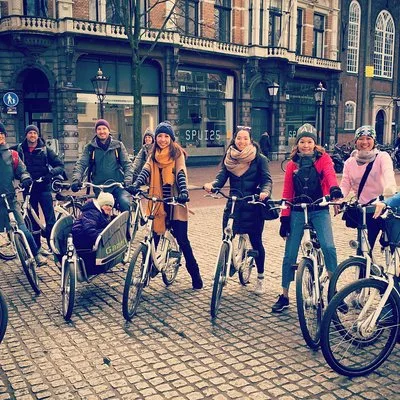
Guided Bike Tour of Amsterdam's Highlights & Hidden Gems
Small Group Bike Tour! We are proud to have Amsterdam's smallest groups!
Book on ViatorThe Original Bike Tour of Amsterdam Highlights and Hidden Streets — operated by Yellow Bike since 1990 — takes a similar approach, weaving through the Jordaan's narrow streets and stopping at several hidden courtyards. The 3-hour format includes enough time to step inside the most accessible hofjes.
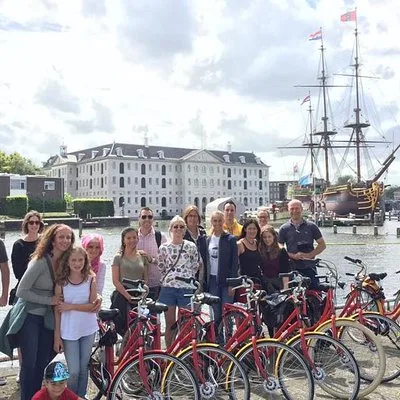
Amsterdam 3 hrs Bike Tour – live guide En/Fr/De/Nl/Sp/It
This is the big bike tour with a live guide in English, Dutch and German and audio in Spanish and French.
Book on ViatorFor those who prefer not to pedal, the Amsterdam Your Way: Canals, Hidden Corners & Local Life walking tour focuses specifically on the city's hidden spaces, including several gardens that even many locals don't know exist.

Amsterdam Your Way: Canals, Hidden Corners & Local Life
This isn’t a scripted sightseeing tour. Your host will shape the day around your rhythm—walking canal paths, exploring…
Book on ViatorSelf-Guided Exploration: The Freedom Option
If you prefer to set your own pace, a self-guided walk is entirely feasible. Start at the Begijnhof, then walk north through the Negen Straatjes, checking for open gates along the Herengracht and Keizersgracht. Cross the Prinsengracht into the Jordaan and visit the Karthuizerhof and Suykerhofje.
The Amsterdam Self Guided Walking Route of Highlights and Hidden Gems provides a structured route with GPS navigation, taking you past the city's most significant courtyards without the need for a live guide.

Self-Guided Secrets of Amsterdam Exploration Game
Discover the best kept secrets in the city’s historic centre with the Secrets of City Game, an exciting GPS-based…
Book on ViatorE-Bikes: Covering More Ground
Amsterdam's courtyards are concentrated in the city center, but a few notable gardens lie further afield. The E-Bike Tour, Amsterdam's Highlights and Hidden Gems extends your range to include the Plantage district and the eastern harbor area, where former docklands have been converted into green public spaces.
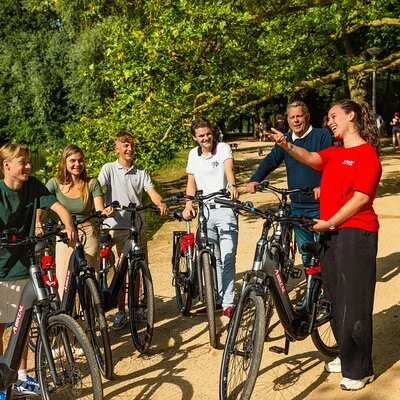
Amsterdam: E-Bike Sightseeing Tour
On this electric bike tour, you'll explore Amsterdam's many charms without tiring yourself out.
Book on ViatorThe Amsterdam Pass: Combining Gardens with Museums
If you plan to visit several museums alongside your garden exploration, the Amsterdam Pass (operated by Go City) bundles entry to 45+ attractions, including the Rijksmuseum, the Hortus Botanicus, and the Van Gogh Museum. The pass also covers a canal cruise, which offers a different perspective on the city's green spaces.
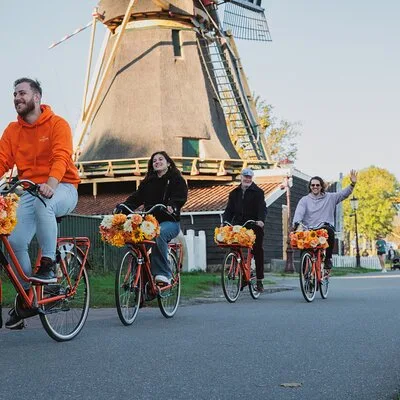
Amsterdam Cheese, Windmill & Countryside Bike Tour /E-bike Option
Leave the city behind and enjoy a beautiful 3-hour guided bike tour through the serene Dutch countryside.
Book on ViatorRecent reviewers note that the pass's value depends entirely on your itinerary. If you plan to visit three or more major attractions, it generally pays for itself. If you're only interested in the Hortus Botanicus and a single museum, booking tickets individually may be cheaper. Check the app carefully before purchasing.
Seasonal Considerations
Amsterdam's courtyards and gardens change dramatically with the seasons.
Spring (March–May): The tulip season brings color to even the smallest hofjes. Expect crowds at the Hortus Botanicus and the Begijnhof during April, especially around King's Day (April 26 in 2026).
Summer (June–August): Courtyards are at their lush peak, but this is also the busiest season. Visit early morning or late afternoon to avoid the worst crowds. The Begijnhof opens at 9:00 AM; arrive before 10:00 to experience it in relative quiet.
Autumn (September–November): The gardens take on golden tones, and visitor numbers drop significantly. The Open Monumentendag weekend in September often provides rare access to private courtyards.
Winter (December–February): Many gardens close or reduce hours. The Begijnhof remains open year-round, as does the Hortus Botanicus. The tropical greenhouse is especially welcome on cold days.
Practical Tips
FAQ
Are Amsterdam's courtyards free to visit?
Most hofjes are free to enter, provided the gate is open and you respect residents' privacy. The Begijnhof is free, though donations are appreciated. The Hortus Botanicus charges admission (about €13 for adults in 2026).
Which courtyard is the oldest in Amsterdam?
The Begijnhof, dating from the early 14th century, is the oldest courtyard in Amsterdam. The current buildings date mostly from the 17th and 18th centuries, following several fires.
Can I visit courtyards in the evening?
Most courtyards close at dusk or have limited evening hours. The Begijnhof closes at 5:00 PM. The Hortus Botanicus occasionally hosts evening events in summer; check their calendar for details.
Are there guided tours specifically focused on courtyards?
Yes. Several walking tours focus on hidden courtyards and gardens, including the Amsterdam Your Way tour and the self-guided GPS route. The bike tours also stop at multiple courtyards.
Tickets sell out — see our Anne Frank House tickets guide.
What should I wear when visiting courtyards?
Comfortable shoes are essential — most courtyards have cobblestone or gravel paths. In summer, bring water and sun protection; gardens offer limited shade. In winter, dress warmly; courtyards are exposed to wind.
Amsterdam's hidden courtyards and secret gardens reward those who look beyond the obvious. They offer a glimpse into the city's social history, its architectural heritage, and its enduring commitment to green space. Step through the right door, and you'll find a quieter Amsterdam — one that has been there all along, waiting for you to discover it.
Some links below are affiliate links — we may earn a commission at no extra cost to you, which helps keep our guides free.