

Amsterdam welcomes roughly 23.7 million overnight stays a year, and the city is actively trying to push that number back down. If you're planning a trip in 2026, that tension works in your favor: the loudest districts are being managed more strictly, and the quieter corners of the city are easier to reach than ever. This guide is for travelers who want to sleep with the windows open, hear church bells instead of bar chatter, and still be 15 minutes from the Rijksmuseum.
Here's where to stay for a quiet Amsterdam trip — and why each neighborhood earns its place.
Oud-West: Local Rhythm, Ten Minutes from the Museums
Oud-West sits just west of the Vondelpark and the museum quarter, but it feels like a different city. The streets around Bilderdijkstraat and Kinkerstraat are full of bakeries, Turkish grocers, and neighborhood cafés where locals actually sit down for coffee. Traffic is mostly bicycles and trams, and the noise drops off sharply once you leave the main shopping street.
The trade-off is honest: Kinkerstraat itself is busy during the day. Book a side street — the blocks between Eerste Constantijn Huygensstraat and the canal belt are noticeably calmer at night. From here you can walk to the Van Gogh Museum in about 15 minutes, and tram lines along Kinkerstraat get you to Centraal Station without a transfer.
Prices here run below the city average. Mid-range hotels in Oud-West typically land in the €180–€280 range in peak season, and you'll find better value in the autumn shoulder season at €130–€220. If you want a quiet base with real neighborhood life, this is the strongest all-rounder.
Rivierenbuurt: Wide Streets, Few Tourists, Real Amsterdam
Rivierenbuurt was built in the 1920s and 1930s as part of the Plan Zuid expansion, and its wide avenues and low-rise apartment blocks make it one of the calmest districts inside the ring road. You won't find souvenir shops here. You'll find butcher shops, a weekly market on Rijnstraat, and the kind of quiet that surprises visitors who assume all of Amsterdam is packed.
The neighborhood sits between the Amstel River and the RAI convention center, with tram 4 and metro line 52 connecting you to the center in about 15 minutes. Anne Frank's family lived on Merwedeplein before going into hiding, and the square still has a small statue and a quiet, residential feel.
Rivierenbuurt suits families and remote workers especially well. Hotel options are limited compared to the center, so consider it if you're booking an apartment-style stay — but note the 2026 short-stay rules, which cap Airbnb-style rentals at 15 nights per year in the city center and De Pijp. Rivierenbuurt falls outside that specific restriction, but always confirm your host's permit.
Plantage: Green, Leafy, and Steps from the Water
The Plantage district wraps around Artis Zoo and the Hortus Botanicus, and it's one of the few central areas where you can hear birdsong over traffic. The streets here are broad, lined with trees, and anchored by the Jewish Historical Museum and the Portuguese Synagogue.
Yes, Artis brings daytime family crowds, and the zoo's lions occasionally make themselves heard in the morning. But evenings in Plantage are remarkably still. The area borders the Oosterdok and the Entrepotdok, a former warehouse complex turned residential, where canal-side benches stay empty on weeknights.
For a quiet stay with genuine walkability, Plantage is hard to beat. You're 10 minutes on foot from Waterlooplein metro, and the walk along the Nieuwe Herengracht toward the center is one of the prettiest quiet routes in the city.
If you want to explore the canals without the noise of a party boat, a small-group cruise is the calmer option:
Amsterdam Classic Saloon Boat Cruise with Drinks and Cheese is a covered, 60-minute cruise through the UNESCO-listed canal ring with unlimited drinks and Dutch cheese. It holds a 4.8 rating across more than 33,000 reviews, though some recent travelers report that the actual boat can differ from the photos, so check the departure details carefully.

Amsterdam Classic Saloon Boat Cruise with Drinks and Cheese
On this 1-hour Luxury Classic Saloon Boat Cruise, you will discover Amsterdam from the comfort of a classic, covered…
Book on ViatorWatergraafsmeer: The Suburb That Feels Like a Village
Watergraafsmeer, east of the center, is technically a polder — land reclaimed from water in the 17th century. It's now a low-density residential district of garden plots, allotments, and quiet streets named after scientists and philosophers. There's almost no tourist infrastructure, which is exactly the point.
The area is best for travelers staying a week or more who want a genuine residential experience. Tram 19 and the Science Park rail link connect you to the center. Frankendael Park, a former estate with a manor house and a popular brunch café, is the neighborhood's social heart — busy on Sunday afternoons, silent by Monday evening.
Budget travelers should note that hostel beds citywide run €40–€65 per night, but Watergraafsmeer has few hostels. This is more of a mid-range and apartment district.
The Eastern Islands and KNSM: Waterfront Calm with City Access
The Eastern Docklands — including the KNSM Island, Java Island, and Borneo Island — were redeveloped in the 1990s into some of Amsterdam's most architecturally interesting residential areas. They're surrounded by water on nearly all sides, which means very little through-traffic and very little noise.
Java Island's narrow bridges and canal-side walkways are peaceful even on summer weekends. The area is a 10-minute tram ride (line 26) from Centraal Station, and the free IJ ferries behind the station connect you to Amsterdam-Noord for a different kind of quiet.
One caveat: dining and nightlife options are limited, so you'll be traveling for dinner. If you value silence over convenience, this is the trade you want.
Jordaan: Quiet If You Choose the Right Street
The Jordaan has a reputation as one of Amsterdam's liveliest districts, and parts of it — around the Nine Streets and Lindengracht on market day — absolutely are. But the Jordaan is also full of hidden courtyards and inner gardens, and its side streets off the main drags are surprisingly still.
If you want the Jordaan's charm without the noise, aim for the blocks near the Noordermarkt's quieter edges or the streets close to the Westerkerk that aren't on a bar route. Avoid anything directly on Rozengracht or near a brown café with outdoor seating.
To understand the neighborhood's history and food culture on foot, a private tour is a good way to get oriented before you commit to a base:
Amsterdam Private Food & Drinks Tour by UNESCO Canals & Jordaan covers 10+ tastings across five local spots in Spui, the canal ring, and the Jordaan. It's rated 4.9 from 154 reviews, and pricing is per group — from around €420 for a solo traveler to €930 for ten guests.
How to Test a Neighborhood's Noise Before You Book
A few practical checks save a lot of regret:
- Check the tram line. Trams run until around midnight and start again before 6 a.m. A room on a tram street is never truly quiet.
- Look for a courtyard. Amsterdam's canal houses often hide interior gardens. These rooms are the quietest in the city.
- Avoid the Red Light District entirely if quiet matters. Photography of sex workers is prohibited there, and the area is actively managed for crowd control.
- Consider the season. November through February is the cheapest and calmest window, with mid-range rooms at €100–€180 outside the December holidays.
- Factor in the tax. As of January 1, 2026, VAT on hotel accommodation rose from 9% to 21%, and combined with the 12.5% tourist tax, roughly a third of your room rate now goes to tax. Budget accordingly.
Getting Around Quietly
Amsterdam's public transport is easy to use with contactless payment via OVpay — just tap in and out with a bank card or phone. A GVB day pass starts around €9–€10 for 24 hours and covers trams, metro, and buses.
From Schiphol Airport, the train to Centraal Station takes 17–20 minutes and costs about €5–€6. If you're staying in Oud-West or near the museum district, the Airport Express bus 397 drops you closer to your hotel.
And if you want to see the city the way locals do — quietly, on two wheels — a guided ride through the residential districts is a good introduction:
Small Group Guided Bike Tour of Amsterdam's Hidden Gems runs about three hours with a 4.9 rating across more than 3,000 reviews. Recent travelers consistently praise the guides for keeping groups safe on busy streets and for showing parts of the city most visitors never walk to.
For an even lower-key option, a self-guided route lets you set your own pace and avoid groups altogether:
Amsterdam Self Guided Walking Route of Highlights and Hidden Gems is a digital route costing under €10, blending well-known sights with quieter corners. It's a new listing with limited reviews so far, but the format suits anyone who wants to wander without a schedule.
Amsterdam Self Guided Walking Route of Highlights and Hidden Gems
Self-Guided Amsterdam Walk with Highlights & Hidden Gems This is not a scavenger hunt, quiz, or game — just a thoughtfu…
Book on ViatorPractical Tips
Mid-range room rates: €100–€180 low season, €180–€350+ peak season
Tax burden: Roughly 33.5% combined VAT and tourist tax on overnight stays in 2026
Short-stay cap: 15 nights per year for Airbnb-style rentals in the center and De Pijp from April 1, 2026
Transport: Tap in and out with a contactless card; GVB day passes from €9–€10
Behavior rules: No public cannabis smoking in central areas (€100 fine), no street alcohol, no photographing sex workers
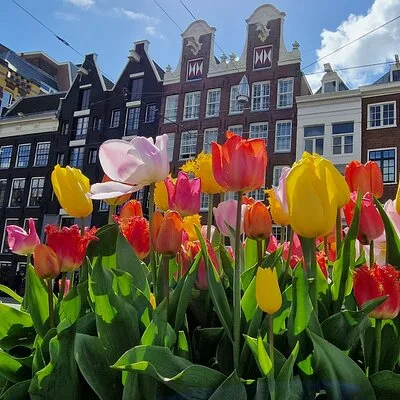
If you're visiting in spring, note that April is the most expensive month after summer because of King's Day on April 27 and tulip season. If quiet and value both matter, aim for late September or October, when mid-range rooms settle back to €130–€220.
FAQ
Which Amsterdam neighborhood is quietest for sleeping?
Rivierenbuurt and Watergraafsmeer are the quietest overall because they're primarily residential and have little tourist infrastructure. Within the center, the Eastern Docklands and Plantage are the calmest options.
Is the Jordaan too noisy to stay in?
It depends entirely on the street. The Jordaan's main routes near the Nine Streets and Lindengracht are lively, but side streets and courtyard-facing rooms are genuinely peaceful. Ask your hotel which side your room faces.
How much should I budget for a quiet hotel in Amsterdam in 2026?
Expect €100–€180 per night for mid-range rooms in low season, and €180–€350+ in peak summer. Remember that roughly a third of that goes to VAT and tourist tax.
Tickets sell out — see our Anne Frank House tickets guide.
What's the best way to get from Schiphol to a quiet neighborhood?
Take the train to Centraal Station (17–20 minutes, about €5–€6), then a tram or metro to your district. For Oud-West and the museum area, the Airport Express bus 397 is often more direct.
Are canal cruises noisy?
Not all of them. Electric cruises and covered saloon boats are much quieter than open party boats. A cruise departing from near the Anne Frank House is marketed specifically for its quiet ride and local skipper stories, and it's rated 4.4 from 746 reviews.
Is there anything to do in these quiet neighborhoods?
Plenty. Frankendael Park in Watergraafsmeer, the Hortus Botanicus in Plantage, and the Rijnstraat market in Rivierenbuurt all reward a slow morning. For a livelier contrast, the Heineken Experience sits in the center and offers a rooftop option if you want one big-ticket stop between quiet days.
Some links below are affiliate links — we may earn a commission at no extra cost to you, which helps keep our guides free.